The Wiltshire Wildlife Trust are trying to highlight the issues the county faces with invasive non-native species (INNS). Their first task is to educate people to the three main plants that can cause issues and how to identify them.
They are hoping once the plants are recognised, they can be uploaded onto https://innsmapper.org/home which is also available in a mobile App. This information helps map the extent of these plants and helps us plan to treat/remove them.
These invasives not only effect the environment by outcompeting native flora, but they can also impose huge economic burdens. The Wiltshire Wildlife Trust can provide advice on dealing with INNS and sometimes provide treatment. These plants usually raise their heads in the spring months, and continue to grow throughout the year.
Understanding Invasive Non-Native Species in Wiltshire
Invasive Non-Native Species (INNS) are a significant concern for conservation efforts worldwide, and Wiltshire is no exception. These are plants and animals that have been introduced to an area outside of their natural range and cause harm to the environment, the economy, or even our health.
What are INNS and Why are They a Problem?
Invasive Non-Native Species (INNS) arrived in Great Britain due to accidental human transportation, or through natural dispersal from non-native populations in Europe. More than 2000 species of plants and animals from around the globe have found their way here.
While the majority are harmless, approximately 10-15% of them spread and turn into invasives. This percentage can have a negative impact on our native species by competing for resources, or by parasitism, disease or direct consumption. These invasives can impose economic burdens and can influence our health and way of life.
Examples of INNS in Wiltshire:
Common INNS found in the UK that may also be present in Wiltshire include:
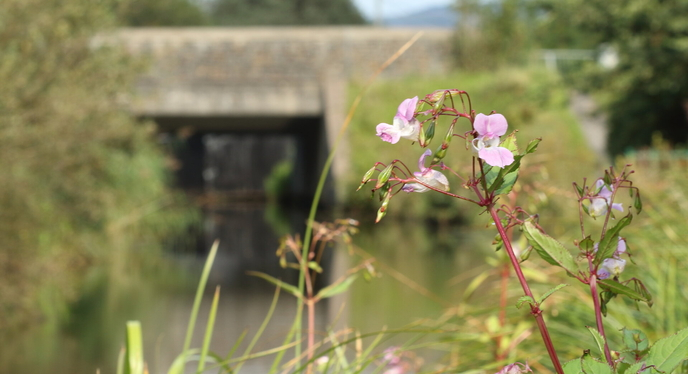
Himalayan Balsam: A fast-growing plant that can dominate riverbanks, preventing native plants from growing.
Despite its attractive pink or white flower, that bees love, Himalayan Balsam (Impatiens glandulifera) is a very quick growing, annual flowering plant that out competes the native flora. The seed pods are like coiled springs ready to disperse the seed up to seven metres away. Each plant is capable of producing 800 seeds, so coverage is vast if left without management. It can manage to grow with very little light and can grow anywhere. Once the plant has had a season, the stem dries out and as it has a very shallow rooting system, it can be pulled out of the riverbanks by the first floods. This leaves the banks bare and causes erosion.
Orange Balsam – Impatiens capensis, Very similar to Himalayan Balsam but has orange flowers
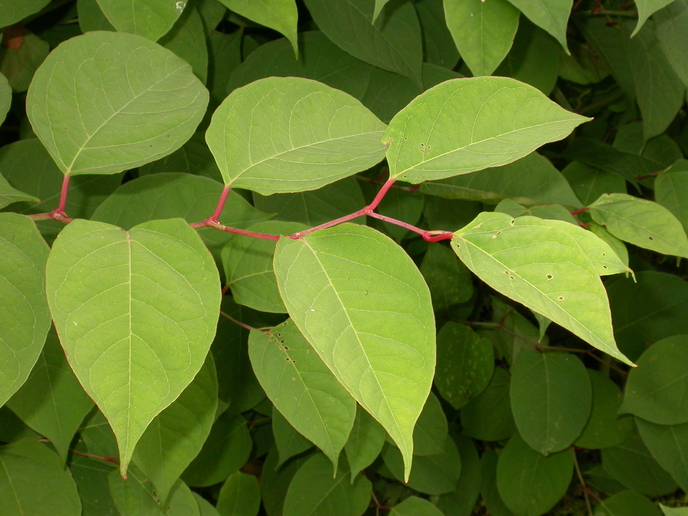
Japanese Knotweed: A highly invasive plant that can damage buildings and infrastructure.
Japanese Knotweed (Fallopia japonica) is a perennial that stands about two metres tall. The rhizomes push the stem up through the earth and grow spear shaped leaves. The flower has a small whitish orchid look, which doesn’t go to seed in the UK. Instead, the plant can grow fresh sprouts from less than a one-inch cutting. Thus, can spread downstream extremely quickly if mis-managed. This is one of the most economically important invasive non-native species, as eradication is required by law
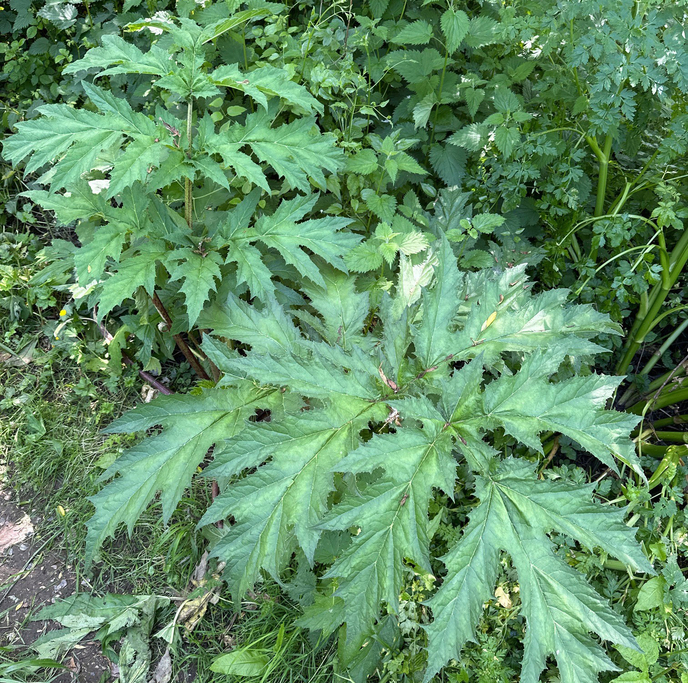
Giant Hogwood – Heracleum mantegazzianum belongs to the same family of Apiaceae, like the Carrot, Parsnip and Coriander.
First introduced into the UK as an ornamental in the 19th century, where it escaped and quickly naturalised. Its origins are from Central Asia and the Caucasus mountains. It is often found on riverbanks where the seeds travel down the water course. It thrives in derelict gardens and neglected waste ground.
Giant hogweed is similar to Common hogweed and flowers like cow parsley, and once fully grown can reach heights between 1.5m – 5m tall. The leaves can reach 1.5m – 3m long and look like rhubarb leaves. The underside of the leaf can be hairy, and the leaf can have sharp or jagged edges. The stems are green with purple blotches and bristles. The flowers are often around 60cm in diameter. Everything about this plant is giant.
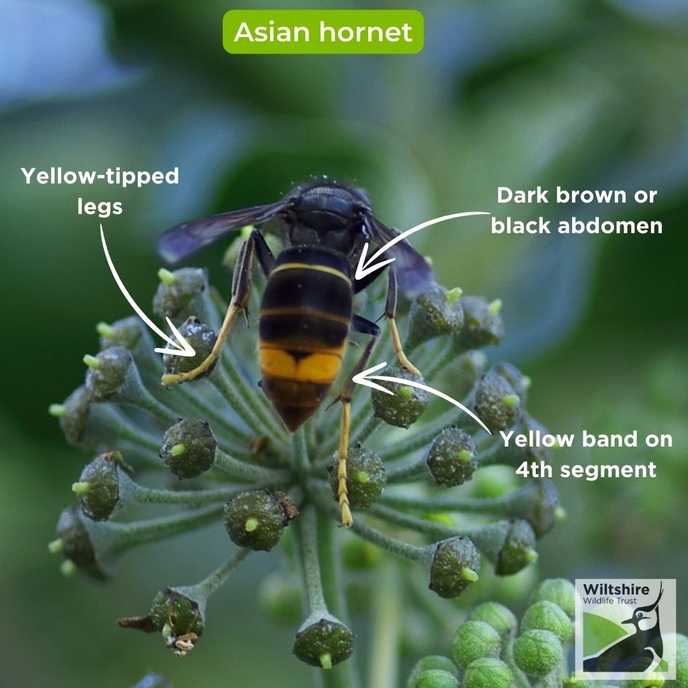
Yellow Legged Asian Hornet
One species of high concern is the Asian hornet, which is threatening our native insects. The Asian hornet is one of 19 invasive species which are currently on alert due to the damage they can do to native wildlife.
They are a predator to the majority of our pollinators, including honeybees, with one of their nests consuming 11kg of insects in one year. They have no natural predator in the UK, so their numbers can easily increase if not controlled, presenting a huge risk to Wiltshire’s insect population.
They also present a health risk to those who have allergies to hornet or wasp stings.
Yellow Legged Asian Hornet
One species of high concern is the Asian hornet, which is threatening our native insects. The Asian hornet is one of 19 invasive species which are currently on alert due to the damage they can do to native wildlife. They are a predator to the majority of our pollinators, including honeybees, with one of their nests consuming 11kg of insects in one year. They have no natural predator in the UK, so their numbers can easily increase if not controlled, presenting a huge risk to Wiltshire’s insect population. They also present a health risk to those who have allergies to hornet or wasp stings.
How You Can Help
If you have a sighting of a certain species, we encourage you to use either iRecord or INNS Mapper which have both smartphone apps and websites. If possible, try and send a photo of the species to help identify them. Please note the yellow legged (Asian) hornet can only be recorded on irecord due to it being an alert species.
Wiltshire Wildlife Trust have kindly supplied a quick ID poster for you to download,
Get involved:
Everyone can help prevent the spread of invasive non-native species by following these five simple steps:
- Local Action Groups (LAGS). Volunteer with us at the Wiltshire Wildlife Trust and other LAGS to tackle invasive species management. LAGS include community action volunteer groups; Wildlife Trusts & River Trusts.
- Record your sightings, particularly alert species.
- Never release your pets into the wild – It can be cruel and harm wildlife.
- Be Plant Wise. Help native wildlife to thrive by stopping the spread of Invasive non-native plants. Pond and aquarium plants can devastate a natural waterbody due to the speed at which they spread.
- Check Clean Dry. Help stop the spread of invasive plants and animals in our native waters. Keep clothing, footwear and equipment used in water free from invasive non-native species after use.
Information taken/supplied by Wiltshire Wildlife Trust

