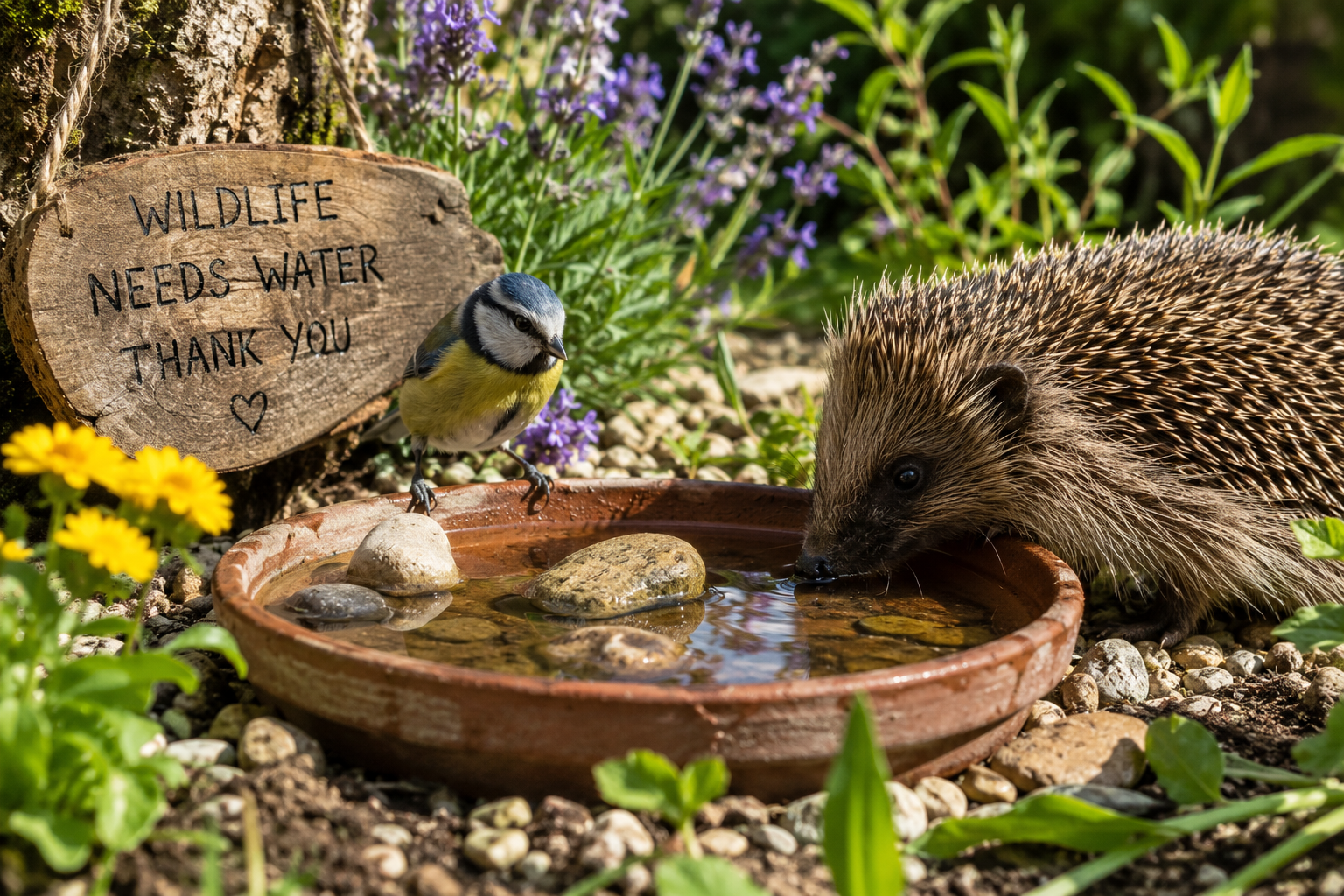
The current hot weather can be difficult for wildlife, especially when natural water sources dry up and shade becomes harder to find. Birds, hedgehogs, bees, butterflies, frogs, toads and other garden visitors can all struggle during long periods of heat.
The good news is that a few simple actions can make a real difference.
Leave out fresh water
One of the most useful things you can do is provide clean, fresh water. A shallow dish, plant saucer or bird bath can help birds and small mammals drink and cool down.
Add a few stones or pebbles so insects can land safely without drowning. For hedgehogs and other small animals, use a shallow bowl rather than a deep container.
The RSPB recommends replacing bird bath water daily and giving it a thorough clean once a week to help prevent the spread of disease.
Source:
RSPB – How to help birds beat the heat
https://www.rspb.org.uk/whats-happening/news/how-to-help-birds-beat-the-heat
Take care with bird feeding in hot weather
Although many people feed garden birds all year round, hot weather increases the risk of food spoiling and disease spreading between birds.
During very warm weather, it is best to keep feeding to small amounts only, avoid bird tables or flat feeding surfaces, and make sure feeders are cleaned regularly. Uneaten food should be removed before it goes stale or mouldy.
If you cannot keep feeders clean, or if you notice any sick-looking birds, stop feeding temporarily and clean feeders and bird baths thoroughly before using them again. The RSPB advises stopping feeding for at least three weeks if you think birds may be affected by disease.
Fresh water is usually more important than extra food during hot spells, but it must be changed daily to keep it safe.
Sources:
RSPB – Latest guidance on what and when to feed garden birds
https://www.rspb.org.uk/whats-happening/news/how-to-help-garden-birds
RSPB – Expert advice on cleaning bird feeders
https://www.rspb.org.uk/birds-and-wildlife/feeding-birds-near-you/keep-your-garden-birds-healthy
Keep water shallow and safe
If you have a pond, make sure there are stones, ramps or gently sloping edges so animals can climb out if they fall in.
The Wildlife Trusts advise that ponds can be topped up during hot weather, ideally with rainwater where available. If using tap water, they recommend adding only a little at a time and, where possible, letting it stand for 24 hours first.
Source:
The Wildlife Trusts – Help wildlife in hot weather
https://www.wildlifetrusts.org/actions/help-wildlife-hot-weather
Create shade and shelter
Wildlife needs places to escape the sun. Leaving areas of grass longer, keeping log piles, allowing shrubs to grow, and avoiding over-tidying the garden can all create cooler hiding places.
The Wildlife Trusts recommend log piles, rockeries and tall grass to provide cover for frogs, toads and newts seeking shelter from the sun.
The Woodland Trust also recommends leaving areas of garden to grow wild during heatwaves, as this provides much-needed shade for wildlife.
Sources:
The Wildlife Trusts – Help wildlife in hot weather
https://www.wildlifetrusts.org/actions/help-wildlife-hot-weather
Woodland Trust – How heatwaves affect wildlife
https://www.woodlandtrust.org.uk/blog/2022/08/how-heatwaves-affect-wildlife/
Be careful when gardening
Before mowing, strimming or cutting back long grass, check carefully for hedgehogs, frogs, slow worms and other wildlife. Many animals hide in long grass and shaded areas during hot weather.
The RSPCA advises taking care when using lawnmowers and strimmers, and keeping pesticides out of reach of animals.
Source:
RSPCA – Keeping wildlife safe in summer
https://www.rspca.org.uk/adviceandwelfare/seasonal/summer/wildlife
Help insects too
Bees, butterflies and other insects also need water. A shallow dish with pebbles, marbles or stones gives them somewhere safe to land and drink.
Watering flowering plants can also help keep nectar available for pollinators.
Avoid putting out unsuitable food
Water is usually the most important thing during hot spells. If you do leave food out for wildlife, keep it fresh, remove anything uneaten, and avoid foods that may spoil quickly in the heat.
For hedgehogs, avoid bread and milk. Fresh water is far better. Suitable hedgehog food or meaty cat/dog food can be used, but remove leftovers promptly.
Keep pets safe too
Domestic animals are also at risk in hot weather. Make sure pets have access to shade, fresh water and ventilation.
Dogs should be walked early in the morning or later in the evening, and never left in cars or hot conservatories.
The Met Office advises checking pets have water and shade, avoiding dog walks during the hottest part of the day, and seeking veterinary advice quickly if an animal shows signs of heat-related illness.
Source:
Met Office – Looking after pets during hot weather
https://weather.metoffice.gov.uk/warnings-and-advice/seasonal-advice/health-wellbeing/looking-after-pets-during-hot-weather
Small actions make a big difference
During extreme heat, wildlife may be under real pressure. A bowl of water, a shaded corner, a topped-up bird bath or a wilder patch of garden can provide a vital lifeline.
Please do what you can, but keep it safe: clean water, clean feeders, shade, and a little bit of care can go a long way.
Useful sources
RSPB – How to help birds beat the heat
https://www.rspb.org.uk/whats-happening/news/how-to-help-birds-beat-the-heat
RSPB – Latest guidance on what and when to feed garden birds
https://www.rspb.org.uk/whats-happening/news/how-to-help-garden-birds
RSPB – Expert advice on cleaning bird feeders
https://www.rspb.org.uk/birds-and-wildlife/feeding-birds-near-you/keep-your-garden-birds-healthy
The Wildlife Trusts – Help wildlife in hot weather
https://www.wildlifetrusts.org/actions/help-wildlife-hot-weather
RSPCA – Keeping wildlife safe in summer
https://www.rspca.org.uk/adviceandwelfare/seasonal/summer/wildlife
Woodland Trust – How heatwaves affect wildlife
https://www.woodlandtrust.org.uk/blog/2022/08/how-heatwaves-affect-wildlife/
Met Office – Looking after pets during hot weather
https://weather.metoffice.gov.uk/warnings-and-advice/seasonal-advice/health-wellbeing/looking-after-pets-during-hot-weather